

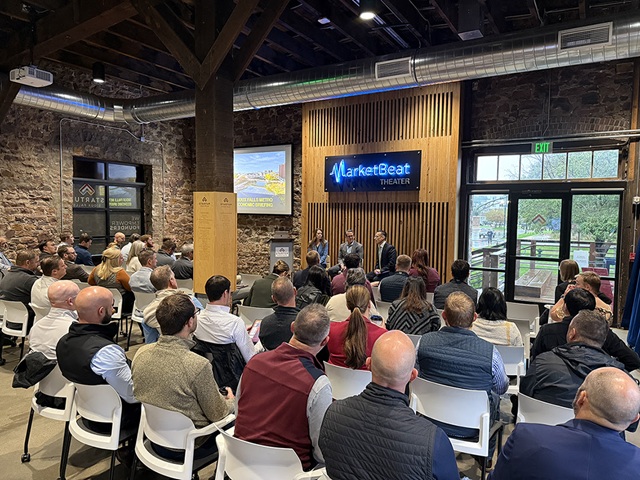
BROOKINGS (10-20-26) — On a rainy September morning in downtown Sioux Falls, local and regional business leaders convened for the inaugural Sioux Falls Metro Economic Briefing. The event was conceptualized by Joseph Santos, academic director of the Ness School of Management and Economics at South Dakota State University.
“We began this event series this fall. We want a morning briefing for industry leaders — or those who aspire to be — to have a rich discussion about the commercial environment and the policy environment that shapes that commercial environment,” he said.
The Sioux Falls Metro Economic Briefing features a panel discussion with two business or civic leaders and a Q&A with the audience. Santos hopes to hold a briefing every other month one hour before the workday starts.
The free event filled the MarketBeat Theatre in Startup Sioux Falls, leaving many standing in the back.
Registration is already open and filling up for the second event on Thursday, Nov. 12, at 8 a.m. Learn more about registration.
Challenges stabilizing or still ahead
The November event will cover healthcare and banking with Jim Dover, CEO of Avera Health, and Chris Ekstrum, president and CEO of First National Bank in Sioux Falls.
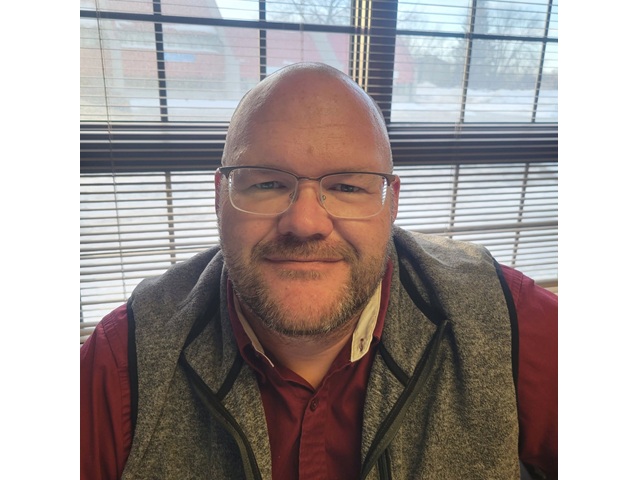
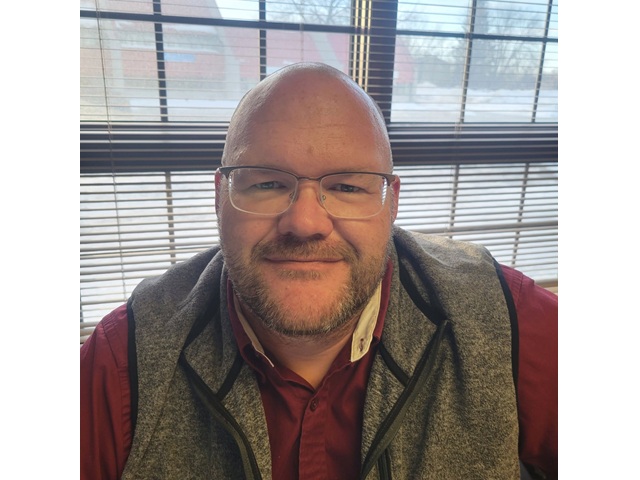
The inaugural panel featured local leaders in construction and energy. Santos was joined by Brian Gramm, CEO of Journey Group, and Crystal Lail, CFO of NorthWestern Energy Group.
The goal was to have a frank discussion, sometimes wrestling with hard topics.
“The first briefing combines construction and energy: What are industry leaders seeing in the Middle East? With oil prices? With interest rates? How are global shocks reaching the region? Are investment decisions being made or not made because of these shocks?” Santos said.
Gramm and Lail discussed rising input costs and what their companies are passing onto consumers and what they aren’t. Inflation persistence was a frequent topic of discussion.
Lucinda Noronha with PRO Resources HR was in the audience.
“This was great. I was glad I was here. It’s great to hear from local individuals and put the world economy into local terms,” she said.
Noronha is the only representative in her Minnesota company who’s stationed in South Dakota, which offers human resource services to small and mid-sized businesses. PRO Resources HR is considering expanding into the state.
As much as the panel discussed inflation persistence, the leaders also discussed why the higher interest rates — which the Federal Reserve had announced a few days prior to the briefing — were nothing to be spooked by.
“It was a relief to hear that — even though everyone is worried about the current rates, they’re not unusual. Unusual was the low-rate bubble we were in for 10 years. We’re back to standard now, which is comforting in a way since it shows we’re out of that bubble, which didn’t burst. It stabilized,” Noronha said.
Another frequent topic was workforce challenges. During the panel discussion, Gramm, CEO of Journey Group, said he feels workforce challenges have lessened since the “COVID craziness,” but they haven’t gone away entirely.
“People who have come up afterward almost all wanted to talk about workforce. We talk about different angles and solutions for it and who’s supposed to be solving it,” he said.
So many people came up to him after that Gramm ran out of business cards to hand out. He hopes to attend the November event as a guest.
Fulfilling a land-grant mission
Santos wanted to do this event series as a public good — and one that extended beyond campus.
“The Ness School’s mission, as part of a land-grant institution that values outreach, calls us to the Sioux Falls metro region,” he said.
The Sioux Falls Metro Economic Briefings are part of the Ness School’s societal impact plan. And these events seek to fill a need in the metro community.
“We don’t want to do what the private sector could do, and we don’t want to do what the public sector is already doing. We want to fill a missing market,” Santos said.
Gramm said he saw that in action at the briefing.
“Inflation, workforce — everyone is wondering about these things. It’s not the South Dakota Chamber of Commerce’s job to come out publicly to discuss these challenges. Forums like this can openly discuss them,” he said.
Private institutions may not want to cover local economic challenges in depth, especially on topics that could impact their image or bottom line.
“It requires someone else to step in and use public resources to fill this void,” Santos said. “This is exactly what a public institution needs to be doing.”
About South Dakota State University
Founded in 1881, South Dakota State University is the state’s Morrill Act land-grant institution as well as its largest, most comprehensive school of higher education. SDSU confers degrees from seven different colleges representing more than 230 majors, minors and specializations. The institution also offers 41 master’s degree programs, 19 Ph.D. and two professional programs.
The work of the university is carried out on a residential campus in Brookings, at sites in Sioux Falls, Pierre and Rapid City, and through Extension offices and Agricultural Experiment Station research sites across the state. SDSU’s research expenditures for the 2026 fiscal year were more than $86 million. SDSU has a Doctoral University: High Research Activity designation on The Carnegie Classification of Institutions of Higher Education.
For more information: SDSU News • www.sdstate.edu
— From SDSU University Marketing and Communications